!Process Cafe Process Cafe

10 BPM blogs you should be following (2013 version)

Back in 2010 I wrote a blog post called 10 BPM Blogs you should be following.

Looking back on my stats it is still one of the most viewed posts I have written.

What I wanted to do today was to update the list of the folks I read on a regular basis to make sure you are linking in to the best.

There have been a number of changes in this list and they basically, fall into two categories:

1) Lack of Updates - If you're not updating your web site you probably shouldn't be on this list
2) Low quality updates - If you're updating but your content isn't worth reading then you shouldn't be on this list.

So, without further ado, here is the updated list. (oh, and there's 11 on this list now...)

  • Bruce Silver: Bruce is the daddy of BPMN, has been in the business for years and knows BPMN like the back of his hand (he should do - he helped write it)
  • Jim Sinur: He's been with Global360 and Gartner and he is the industry analyst for the BPM sector. His writing is often formal and rigid, but that doesn't take away from the value of his contents.
  • Theo Priestley: He's the Process Maverick, always ready to try and upset the applecart when it comes to BPM. When he talks it pays to listen to what he's saying
  • Sandy Kemsley: One of only two women on the list (which is a discussion point in itself). She attends and presents a lot at BPM conferences around the world and always has some useful insight into the latest movements in the BPM market. Her blog is 'Column 2'
  • The Process Ninja: He's Australian based and blogs about real-life applications of process. I look forward to his posts.
  • Connie Moore: The Forrester analyst for BPM and the other woman on the list. Finger on the pulse, covers the industry and the general BPM environment.
  • Bouncing Thoughts - Jaisundar from Stanford on BPM, CRM and CPM.
  • Ashish Bhagwat - Posts on BPM at The Eclectic Zone
  • Keith Swenson - writes thoughtful and informative posts on BPM and ACM (adaptive case management) that often inspire long conversations in the comments, and manages to do so without pushing his own company's products
  • Alberto Manuel - If it's pure BPM research you're looking for, Alberto's your man.
  • BP3 Blog - Scott Francis posts regular updates on BPM and associated topics.

If you were in the original list, but have dropped out, don't worry. It happened to me last year when one of my BPM blogging colleagues dropped me from his list. Don't take it to heart, but have a look at what you might want to do to update your blog.

Enjoy!


Reminder: 'The Perfect Process Project Second Edition' is now available. Don't miss the chance to get this valuable insight into how to make business processes work for you. Click this link and follow the instructions to get this book.

All information is Copyright (C) G Comerford See related info below

Priorities, priorities...

question mark ?

It occurred to me recently that I haven’t asked a question of my readers for a while - one that will provoke some conversation, I mean.

Obviously there are different forums that these conversations can take place - and if you want to do so, please continue those there and link to them in the comments so I can follow along.

My question today is focused on all those people who have responsibility for process (process definition, process management, process implementation etc. - in whatever form you wish to define it - Case Management, Workflow, BPM etc)

What is your main process priority this year? (and why?)

Potential answers could include (but are not limited to):


  • Understanding process gaps.
  • Defining process owners.
  • Documenting my processes.
  • Rationalising my current process inventory.
  • Getting senior management commitment for process change.
I’m interested to understand what people are focusing on this year.

If you feel like indicating how or if this has changed since last year, please do.


Thank you.
Photo Credit: Leo Reynolds via Compfight cc

Reminder: 'The Perfect Process Project Second Edition' is now available. Don't miss the chance to get this valuable insight into how to make business processes work for you. Click this link and follow the instructions to get this book.


All information is Copyright (C) G Comerford
  See related info below

Why our processes aren't perfect.

The Pareto Principle Photo Credit: pshegubj via Compfight cc


A perfect process is - by definition - the ultimate way in which a process can be defined and managed. So you would think that everyone would be striving for the perfect process.

Unfortunately, that isn’t always the case. People tend to strive for ‘good enough’ when it comes to many things. That report you are creating could do with a further grammar check, but we won’t do it. It’s good enough. The decorations on the Christmas tree could do with being tidied up and made absolutely symmetrical, but we’ll leave them as they are. They’re good enough. 

Why is this?
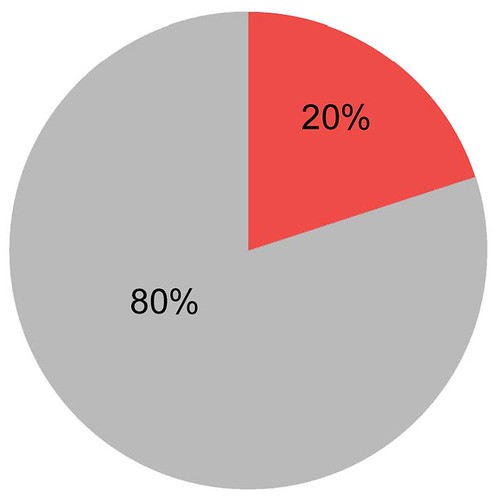
A lot of it is to do with the Pareto rule. The Pareto rule states that 80% of the work is done by 20% of the effort. The remaining 20% will take 80% of the time.

(From Wikipedia: The distribution is claimed to appear in several different aspects relevant to entrepreneurs and business managers. For example:
80% of your profits come from 20% of your customers
80% of your complaints come from 20% of your customers
80% of your profits come from 20% of the time you spend
80% of your sales come from 20% of your products
80% of your sales are made by 20% of your sales staff
Therefore, many businesses have an easy access to dramatic improvements in profitability by focusing on the most effective areas and eliminating, ignoring, automating, delegating or retraining the rest, as appropriate.)

The same happens with processes. An amount of time and energy can be spent reviewing, revising, improving, and implementing processes, but on further review it is discovered that they are only 80% of the way there. To move the process the remaining 20% will take a disproportionate amount of time and energy, sometimes to the point that it becomes economically unwise to pursue.

But is this right?
On a fundamental level the answer is “yes”. If the return on investment of performing the additional 80% the work is less than the benefit of improving the 20% that’s remaining, then ‘good enough’ will suffice. But there are certain points where it becomes less a matter of ROI and more a matter of other things. 

Let’s take airplane construction, for example: Would you fly on an aircraft that had only had 80% of the testing done on it? Would you trust an airline navigation system that had only had 80% of the coding tested? What about a surgeon who had only done 80% of his training?

I know I wouldn’t.

These are examples of when the 80/20 rule needs to be ignored and 100% of the effort needs to be put in.

Can you think of any of your processes where this is the same?

Reminder: 'The Perfect Process Project Second Edition' is now available. Don't miss the chance to get this valuable insight into how to make business processes work for you. Click this link and follow the instructions to get this book.


All information is Copyright (C) G Comerford
  See related info below

The problem with BPM Solutions....

r-fraction
BPM software is big business today. There are, literally, dozens of companies on this particular software space. Gartner classify some of them on various different magic quadrants. Forrester classify them on various different waves. Every day companies are pitched at by software vendors to put in the latest and greatest tool to help them.

But are they any better than people?

At a fundamental level, the answer is - obviously - yes. Software well designed to fulfil a particular task will always beat a human doing the same task (providing the task is something that can be automated or computerised - I wouldn't want a computer performing open heart surgery on me - although computers are now driving cars by themselves). A machine which is programmed to deal with workflow simulation is always going to be able to simulate thousands of transactions through a workflow better than a human.

But do we need them? Do we need to purchase a BPM system in order to be able to implement BPM in an organisation? Is it necessary to spend outlandish amounts of money to make BPM part of your everyday workflow? No. It isn’t. 

BPM - at a fundamental level - is the analysis and implementation of ideal process flows. These can be repetitive, or on a case-by-case basis. But they do not HAVE to be implemented via a computerised system. 

Working on basics it is simple enough to perform process analysis using pens, sticky notes and brown paper. This can then be documented in a workflow drawing, or a process flow, or a procedure. Employees can be trained and the new procedures can be implemented. All of this can be done without a dedicated BPM system.

But why would you?

Well, for one thing, you would do this to determine whether you have the right mindset to implement BPM It is wrong, in my opinion, to think that implementing a tool to solve a problem will solve that problem. Time and time again we see examples of computer systems being put in place to solve problems that don't actually solve those problems.

The problem itself, is, of course, that the problem under consideration is the wrong problem. (There were a lot of problems in that last, sentence, heh?). By this I mean that identifying a problem that needs a tool solution is the wrong problem. It’s similar to saying “This patient has a heart problem that needs a stent”. NO. The problem is that the patient has blocked veins. The stent is a solution for that problem.

Likewise companies become enamoured of the software solution to help them become more efficient, more effective, more responsive, whereas the problem may not be that the company is inefficient, ineffective or unresponsive in the first place.

This is why the first step in deciding whether to implement a BPM solution is NOT to decide to implement a BPM solution. It is to decide what the issue is that you are trying to address. Remove the system from the equation. Ask yourself  “If I was doing this manually, what is going wrong?” Understand what is the fundamental underlying item that needs to be changed to make your problem go away.

Losing customers? The problem might be that you need a CRM solution to better handle them. But it might also be that your product doesn’t give them what they want or you aren’t selling it right (See Jeffrey Gitomer for more about that) 

Manufacturing not fast enough? It might be that you are wasting time on a particular piece of the process and creating a bottleneck. But it might also be that your line is old-fashioned or your employees aren't trained to operate it correctly.

In the examples listed above, knowing what the actual problem is can lead to a completely different solution to the one first anticipated.

That's a good thing.

Reminder: 'The Perfect Process Project Second Edition' is now available. Don't miss the chance to get this valuable insight into how to make business processes work for you. Click this link and follow the instructions to get this book.


All information is Copyright (C) G Comerford
  See related info below
Progress. It is inevitable.

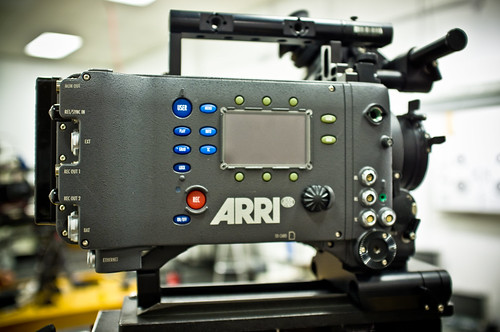
Arri AlexaI was reading an article recently on the progress being made in the manipulation of electronic data on film sets ( I know, right...). In particular the article was talking about how the current methods of dealing with digital film are something that vary between films, film-makers and equipment. In effect many high-profile film-makers are creating brand new workflows for each of their films depending in who they are working with and what equipment they are using.

The new breed of digital cinema cameras (Alexa, Red, Sony, Black Magic) are all slightly different in the way they deal with the pixels. As a consequence they all need to be dealt with in a slightly different manner once the scene has been shot. There is a world of work that might need to be done to take the electronic data stored in a (sometimes proprietary) storage device and turn that into something that can be accessed by an editor on an NLE (non-linear editor), such as Final Cut or Premier Pro. On top of this the storage and processing needs are becoming increasingly large. Consider the recent film The Hobbit which shot 3D scenes at 4k resolution at 48 frames per second, and compare that with, say Skyfall that shot on the Arri Alexa on 2D at 24 frames per second with a frame size of a little over 1080p. To put it another way each second of The Hobbit needed almost 16 times as much storage as Skyfall. That's a huge amount of data to be manipulated.

Added to this is the fact that "The Hobbit" shot on Red Epic cameras which use a different proprietary format to the Arri Alexa used on Skyfall, and you have a completely different workflow needed to deliver the bond film than the Middle-Earth tale.

Is this a good thing, though?

Let's go back and look at things as they were before digital cameras arrived. Someone would buy some celluloid film, rent a camera (several types were available but they all did exactly the same thing), expose the film on set, send it to someone like Technicolor to be developed, and edit using the footage sent back from there. It took a day or so for the footage to be developed, but everyone went through the same process. Sure, there were permutations you could follow (Janusz Kaminski famously 'flashed' the film stock on Saving Private Ryan prior to shooting to help create the Beach- bypass look which gave it it's distinct appearance. It also locked the film-makers into a specific look throughout the movie), but the process was, essentially, identical the world over.

Then we got to the stage where digital effects need to be inserted into these movies. It involved an extra couple of steps to make this happen. The exposed celluloid was scanned into a computer whereby the scenes needing digital effects (i.e. a dinosaur inserting into the scene) could be manipulated on a computer. Thereafter the finished scene would be printed back on to celluloid and edited into the film with all the other scenes.

This worked for a few years until the technology caught up again. During the making of the Star Wars prequels, George Lucas specifically shot certain scenes on digital cameras to see if anyone would notice which were which. Apparently very few people did. This allowed him to take the step of shooting the final prequel completely digitally.

That was when the rush started towards digital. Some of you may know that I also spend a lot of time on film and television sets, and have done so for about six years now. Over the last two years I cannot remember a production I have been involved in that has shot anything on film. Everything is now digital. The Arri Alexa is the camera of choice and each one has a small team of operators who are responsible for taking the data on the storage media and processing it so that it is suitable for the editor to review.

In terms of personnel, the camera team isn't much bigger than it used to be. The person responsible for lugging the huge film magazines around has been replaced by someone who is responsible for the digital data cards or drives. But, whereas the film used to get sent to a processing lab, the digital storage is now given to a DIT or similar. This is a group of people who have responsibility for taking the raw camera footage and backing it up before erasing the storage media so it can be used again later in the shoot. They also take the backed-up data and synchronise the sound (recorded separately) as well as logging the contents of the footage to enable the editor to work efficiently and find what needs to be found. So, overall, the number of people needed on the crew has increased. If you are a low budget production this means that you need to either get someone else in to provide the service detailed above, or you need to be multi-skilled and have the basic knowledge and equipment to do this as part of your workload.

I shot a corporate video recently where I was both the director and the DIT specialist. I purchased a separate backup device and made sure that at the end of the day all of the footage was offloaded to this device and a separate hard drive (dual redundancy), as well as logging the shots so that editing knew what was where. It certainly made for long, busy days on the film set!

So what has this got to do with process? Well, the sharper minds amongst you will have noticed that there are two facets that should be looked at here. The first one is the fact that different cameras and different people have different post-processing workflows. In an ideal process world there would be a common workflow amongst all cameras. Additional to this we have the issue of different players needing to be involved to enable the process to work ( or at the by least having performers with multiple skillets to enable the work to be done). Neither of these is ideal from a process point of view.

But we must ask ourselves whether this is something that needs to be the case. As technology has evolved, are we in the situation where the cameras themselves can make the workload easier? In a recent blog post an owner of a DIT company has said that he expects technology to move on at such a rate that his company will not be needed in three or four years. he expects the camera to have a large amount of the functionality built in to it.

Does this mean that the current processes set up to deal with things like this are wrong? I think it means they are immature. Of course the process professionals amongst would like more standardised handling of digital data - and no doubt the film crews and production companies would also like to be able to handle things the way they did in the old paradigm of celluloid. but until the types of data, the amount of data and the storage media are standardised, there are always going to be some sort of workarounds and camera specific actions that need to be performed. Does this make the process wrong? No, But it makes it less efficient.

Things will mature and standardise. They always do.

Reminder: 'The Perfect Process Project Second Edition' is now available. Don't miss the chance to get this valuable insight into how to make business processes work for you. Click this link and follow the instructions to get this book.


All information is Copyright (C) G Comerford
 See related info below

Standards.


From within the wallsI’ve written on this blog before about some of the issues and problems with BPM as a concept and implementation of these concepts. Mainly the issues can be boiled down to a few key items: Lack of correct change management. Lack of Executive Sponsorship. Lack of ownership.

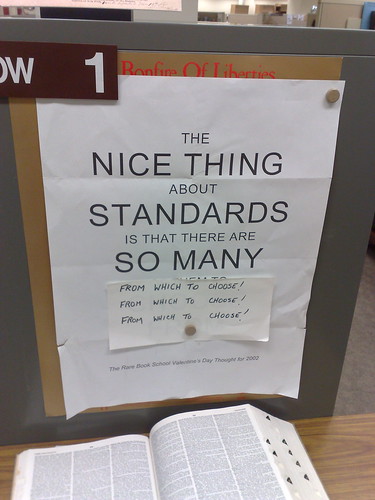
The key thing that these have in common is that they identify something that isn’t there - be it an owner, a manager, an objective. But today I want to talk briefly about something that is usually there - and often in too many different places to be useful: Standards.

Time for the obligatory anecdote:

Back when I worked with a pharmaceutical company we developed a set of standards that would be applied to technology across the organisation. These standards detailed the operating systems we would adhere to, the specification of PC’s we would use, the types of devices we would allow to attach to our networks etc. etc. This was referred to as “The Standards List” for obvious reasons.

However, there was one part of the company who believed that these standards didn't apply to them. They were always looking to use something different, or not use something on the standards list. They were applying for exceptions on a regular basis and getting these approved. It helped that they were a large part of the organisation with a huge budget and some political clout at the CIO level.

But the result of this is that we, effectively, ended up with two lists. There was “The Standards List” that was used by 90% of the company, and there were the exceptions that were used by the remaining 10% (usually this one functional area)

In effect we had two sets of standards. Which, in effect, meant we had no standards. Because it then became known that if you wanted to bring something into the organisation that was non-standard it could be done because there was a precedent. You only had to say ‘This area uses Mac computers on our networks so we want to use them as well - it’s on the list', and we couldn’t stop you.

Why are standards important?
While each department had a perfectly legitimate reason for wanting to bring in something that was non-standard, it did create a problem that was one the standards list was trying to avoid - maintenance and associated costs.

One reason why the company decided on Windows 2000 (at the time) as the standard for desktop operating systems was because we had agreements in place with Microsoft to supply the software and associated upgrades. These were then placed on a disk image which would be quickly and easily replicated onto new machines. Centralised software roll-outs were also provided which meant that a new piece of software could be rolled out to the 30,000 pc’s in the company virtually overnight and under controlled circumstances. All this resulted in lower maintenance costs for the organisation.

However, once we started to allow Ubuntu and MacOS into the company we had to add new steps to our maintenance processes. These steps were exceptions to the standard. They cost time and money to implement and they slowed down software roll-out and burned resources at a time when the company was resource constrained.

Of course these costs were not born by the department that requested the exceptions. These costs were born by the support organisations that had to roll out new software and manage the desktop environment. These costs came out of their budget. They cost the company money it didn’t have.

I suppose it would have been easy to take these costs and bill them back to the appropriate department and make them feel the pain (and in fact I believe that’s what they did towards the end), but this merely resulted in justification for the departments who then took the view that “If you’re billing us for maintenance of our own systems why should we adhere to your standards anyway? We might as well do our own thing”. As a result they created a parallel support organisation which sapped overall costs across the company.

You can see the problem. It all came down to standards. Standards are there for a reason. They have been defined to allow consistency across organisations and allow ease of use and maintenance. It’s the same with process diagram notation. BPMN is a standard, as are TOGAF, Enterprise Architecture and Rummler and Brache. I’m not about to give any credence to one over the other, other than to say as long as you have made your choice and know what you want it doesn’t matter which one you use. But you must ALL use the same one in an organisation.

This can become particularly onerous when you are part of a company that has recently been bought by another company. You will, no doubt, have your own set of standards for many things in the business. The purchasing company will have similar. The chances of the two being the same are very small. So at some point there has to be a rationalisation. The two standards have to become one. This can either be through wholesale replacement of one set with another, or through the merging of the two into a third, common, standard. Either way the newly defined standard has to be accepted and implemented across the organisation.

But what is more important - and often overlooked - is a process for managing the standards. The set of standards you put in place when a business is two years old working in a manual environment manufacturing goods, for example, will not be the same set of standards used by that company after it has been running for twenty years and has automated many manufacturing steps. The management of that evolution should be in place as well. This is an area that is too often left to chance. Without a standardised process to manage your standards, you will end up with a process of half-measures. But you will have a process.

But I’m not sure it’s a process you really want.

Reminder: 'The Perfect Process Project Second Edition' is now available. Don't miss the chance to get this valuable insight into how to make business processes work for you. Click this link and follow the instructions to get this book.

All information is Copyright (C) G Comerford See related info below
Selfishness and Process.

CockpitBack in the mists of time I used to have a valid private pilots licence (PPL). One of the things I wanted to do was get a share of an aircraft so I could increase my flying hours and learn more about this great pastime of flying. I inquired at the local airport and found a great little plane that was within my price range at the time.

But when I looked into the small print of the costs there appeared to be something which - at first - struck me as strange, but than raised a red flag.

As a bit of background: when using a plane there is always a cost involved. This cost varies depending on whether you own a piece of the plane or are borrowing it without an equity involvement. But regardless of whether you are, or are not, there is always the cost of fuel that needs to be factored in. In many cases you take the plane, use it for however long you want and then fill it up when finished, at your own cost. In some instances you can fill it up on a company account and it gets charged to your costs or - and this was the case with the plane I was looking at - you were charged a fixed amount per hour for fuel, regardless of what you used.

The problem with this was the behaviours it promoted. Imagine the situation: regardless of how fast or how far you fly, you are going to be charged a set amount of money for fuel. This was not an insignificant amount either. It equated to 55 litres of fuel per hour for a single engine Cessna. (That's pretty much the same amount of fuel as my road car uses in about 8 days - and aviation fuel is more expensive). So in that situation, would you take it easy with the plane? Would you lean the fuel mixture to be as conservative as possible? Or would you just slam those throttles open and scream across the sky as fast as you could and as inefficiently as you could? Human nature would expect us to do the latter rather than the former. After all if there are ten people renting this plane in a week and they are all paying the same amount per hour, why should you be the one who only uses 75% as much fuel as them but still gets charged for 100%?

There was a knock on effect of this, too. The amount per hour was calculated on the average fuel usage that the owners of the plane were being charged. (They paid for all the fuel themselves and offset it against the hourly fuel rate). But the rate they set was based on current behaviour rather than future expected behaviour. Which means that after a few months of running at the new fuel amount (55 litres per hour), they discovered that they were actually paying for 70 litres per hour of usage (for example). Therefore the owners were losing out on this deal. So what did they do? That's right, the increased the hourly fuel charge to 75 litres regardless of actual usage.

Can you see how this would then become a bit of a problem? The upshot was that a lot of the guys who were renting the plane found that the fuel cost became prohibitive (even though they were using that much fuel per hour), and stopped flying. The owners then started to lose out on the rental charges for the plane. When it came to doing routine maintenance such as replacing the engine or the propellor, they found they had to stump up the money from their own pockets.

As I thought about this today I realised that there is a lesson in there from a process point of view. The process that was being initiated had measures or metrics that were - effectively - Key Performance Indicators for the whole process. They determined the efficacy of the process (after all, if the plane was using more than 55 litres of fuel per hour then the ROI on the process was reduced). But what had happened to this process was that it had become driven by the KPI rather than measured by the KPI. This was an occasion when the adage "What gets measured gets rewarded" did not apply. Quite the opposite intact.

The process had been designed with a flaw in it. The measure was inappropriate for the process. A more correct measure would have been to remove the fixed cost per hour and replace it with a variable cost based on actual usage. This added a small administrative burden to the billing process, but resulted in more flexible (and better run) flights, where the fuel usage wasn't excessive.

It might be worth having a look around your current process and seeing if there is anything in there which is working in a counterintuitive way. Do you have any process steps that are time dependent and allow a larger amount of time than is needed? Could you cut down that time to enforce the right behaviours of efficiency and speed? Could you organise your workflow in such a way that you are not encouraging unwanted behaviours from the participants.

You might be surprised at what you can change.

Reminder: 'The Perfect Process Project Second Edition' is now available. Don't miss the chance to get this valuable insight into how to make business processes work for you. Click this link and follow the instructions to get this book.

All information is Copyright (C) G Comerford
  See related info below