!Process Cafe Process Cafe

Showing posts with label change. Show all posts

Size Matters.

back 2 school : ruler
One thing I have learned since leaving the comfortable role I held in a huge American multinational and starting my own business is that large companies do not have a clue about how to run a responsive organisation.

They are slow (and very resistant) to change, unreactive and labouring. Their processes are usually large and complicated, and this results in a lack of ability to go with quick changes that are often required.

The governance process I worked with within the multi-national involved tortuous meetings with nineteen interested parties where prospective change agents would plead their case for why their particular affiliate/department/competency was different and required something to be changed. This would all then be discussed, moderated and voted upon. More often than not the stupid, nonsensical ideas would be passed, whereas the ones that would genuinely make a difference to the business were blocked. Sure, we would let the Spanish affiliate have its own, Spanish language, portal. And if we were doing that then we would also let Italy have an Italian language one, Portugal have their own and Germany and France have their own. But would we hold all these and sanction a European (or company wide) portal that was multi-lingual and customisable? No, not a chance.

Why? Size.

An affiliate that deals with its own portal can budget for its own portal. It can manage its own portal and it can pay for its own portal. If we put something in that is cross European (or global) then money has to be found from other budgets and responsibility for maintenance has to be found too. The fact that the money and resource all come, in effect, from the same big bucket is carefully swept under the table. It becomes a political game.

But in a small company, such as the one that I and millions of other small businessmen run around the world, something like this is a simple, no-brainer. Do we need a portal? Yes. Can we afford it? Yes. Do it! The governance is light and quick and the decision is made pretty much instantly.

The same can be said for process. Things work on a process in every company. In smaller companies the process is probably very light and fluid. Checks and balances might not be as necessary as they are in larger companies. But the ability to modify or redesign a process is a lot easier in smaller companies. We can react to the market conditions and change direction/strategy/ market a lot quicker.

So if small companies can do this so much quicker, why are they not ruling the world? Well, when they start to rule the world they get bigger and the ability to react as quickly disappears. Companies like Amazon and Google were once small start-ups. They had small staff numbers, small capital and big ideas. They were responsive to what the market wanted and they could pivot on a sixpence if needed. They could fail quickly and move on. This mentality is now no longer there to the same extent (although a lot of this is cultural. Google’s “Spend 20% of your time on your own projects” ethos has now fallen pretty much by the wayside, for example)

So what are larger companies to do? How can they become leaner and more reactive? The answer is easy (although the implementation is not). To become leaner and quicker you have to.. become leaner and quicker. Remove the levels of bureaucracy that slow down changes. Keep the organisational chart  shallow enough that you can get the decision makers into a room and make decisions quickly. Put the decision makers at the right place in the organisation. I’ve talked previously about process owners and the need for them to be at the board level. This is an immediate example of why.

Sure, size matters. 

But not in the way you think.

Photo Credit: S@Z via Compfight cc

Reminder: 'The Perfect Process Project Second Edition' is now available. Don't miss the chance to get this valuable insight into how to make business processes work for you. Click this link and follow the instructions to get this book.


All information is Copyright (C) G Comerford
See related info below

Progress. It is inevitable.

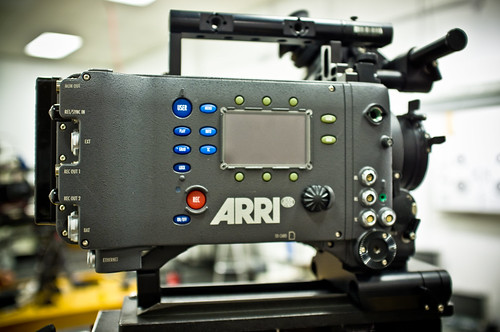
Arri AlexaI was reading an article recently on the progress being made in the manipulation of electronic data on film sets ( I know, right...). In particular the article was talking about how the current methods of dealing with digital film are something that vary between films, film-makers and equipment. In effect many high-profile film-makers are creating brand new workflows for each of their films depending in who they are working with and what equipment they are using.

The new breed of digital cinema cameras (Alexa, Red, Sony, Black Magic) are all slightly different in the way they deal with the pixels. As a consequence they all need to be dealt with in a slightly different manner once the scene has been shot. There is a world of work that might need to be done to take the electronic data stored in a (sometimes proprietary) storage device and turn that into something that can be accessed by an editor on an NLE (non-linear editor), such as Final Cut or Premier Pro. On top of this the storage and processing needs are becoming increasingly large. Consider the recent film The Hobbit which shot 3D scenes at 4k resolution at 48 frames per second, and compare that with, say Skyfall that shot on the Arri Alexa on 2D at 24 frames per second with a frame size of a little over 1080p. To put it another way each second of The Hobbit needed almost 16 times as much storage as Skyfall. That's a huge amount of data to be manipulated.

Added to this is the fact that "The Hobbit" shot on Red Epic cameras which use a different proprietary format to the Arri Alexa used on Skyfall, and you have a completely different workflow needed to deliver the bond film than the Middle-Earth tale.

Is this a good thing, though?

Let's go back and look at things as they were before digital cameras arrived. Someone would buy some celluloid film, rent a camera (several types were available but they all did exactly the same thing), expose the film on set, send it to someone like Technicolor to be developed, and edit using the footage sent back from there. It took a day or so for the footage to be developed, but everyone went through the same process. Sure, there were permutations you could follow (Janusz Kaminski famously 'flashed' the film stock on Saving Private Ryan prior to shooting to help create the Beach- bypass look which gave it it's distinct appearance. It also locked the film-makers into a specific look throughout the movie), but the process was, essentially, identical the world over.

Then we got to the stage where digital effects need to be inserted into these movies. It involved an extra couple of steps to make this happen. The exposed celluloid was scanned into a computer whereby the scenes needing digital effects (i.e. a dinosaur inserting into the scene) could be manipulated on a computer. Thereafter the finished scene would be printed back on to celluloid and edited into the film with all the other scenes.

This worked for a few years until the technology caught up again. During the making of the Star Wars prequels, George Lucas specifically shot certain scenes on digital cameras to see if anyone would notice which were which. Apparently very few people did. This allowed him to take the step of shooting the final prequel completely digitally.

That was when the rush started towards digital. Some of you may know that I also spend a lot of time on film and television sets, and have done so for about six years now. Over the last two years I cannot remember a production I have been involved in that has shot anything on film. Everything is now digital. The Arri Alexa is the camera of choice and each one has a small team of operators who are responsible for taking the data on the storage media and processing it so that it is suitable for the editor to review.

In terms of personnel, the camera team isn't much bigger than it used to be. The person responsible for lugging the huge film magazines around has been replaced by someone who is responsible for the digital data cards or drives. But, whereas the film used to get sent to a processing lab, the digital storage is now given to a DIT or similar. This is a group of people who have responsibility for taking the raw camera footage and backing it up before erasing the storage media so it can be used again later in the shoot. They also take the backed-up data and synchronise the sound (recorded separately) as well as logging the contents of the footage to enable the editor to work efficiently and find what needs to be found. So, overall, the number of people needed on the crew has increased. If you are a low budget production this means that you need to either get someone else in to provide the service detailed above, or you need to be multi-skilled and have the basic knowledge and equipment to do this as part of your workload.

I shot a corporate video recently where I was both the director and the DIT specialist. I purchased a separate backup device and made sure that at the end of the day all of the footage was offloaded to this device and a separate hard drive (dual redundancy), as well as logging the shots so that editing knew what was where. It certainly made for long, busy days on the film set!

So what has this got to do with process? Well, the sharper minds amongst you will have noticed that there are two facets that should be looked at here. The first one is the fact that different cameras and different people have different post-processing workflows. In an ideal process world there would be a common workflow amongst all cameras. Additional to this we have the issue of different players needing to be involved to enable the process to work ( or at the by least having performers with multiple skillets to enable the work to be done). Neither of these is ideal from a process point of view.

But we must ask ourselves whether this is something that needs to be the case. As technology has evolved, are we in the situation where the cameras themselves can make the workload easier? In a recent blog post an owner of a DIT company has said that he expects technology to move on at such a rate that his company will not be needed in three or four years. he expects the camera to have a large amount of the functionality built in to it.

Does this mean that the current processes set up to deal with things like this are wrong? I think it means they are immature. Of course the process professionals amongst would like more standardised handling of digital data - and no doubt the film crews and production companies would also like to be able to handle things the way they did in the old paradigm of celluloid. but until the types of data, the amount of data and the storage media are standardised, there are always going to be some sort of workarounds and camera specific actions that need to be performed. Does this make the process wrong? No, But it makes it less efficient.

Things will mature and standardise. They always do.

Reminder: 'The Perfect Process Project Second Edition' is now available. Don't miss the chance to get this valuable insight into how to make business processes work for you. Click this link and follow the instructions to get this book.


All information is Copyright (C) G Comerford
 See related info below

"Things they are a changing" at the Process Cafe

Chiemsee - Bayern - DeutschlandImage via Wikipedia

The Process Cafe is approaching it's third year in existence (2.75 to be strictly accurate) and I figured it was about time to see if I could change the layout and design of the site.

To be honest I was never really taken with the old 'dark blue background' look of the site but - of the basic templates provided by blogger (who host this site) - it was probably the one I thought reflected the style of the site the best.

Had I been on Wordpress I would have been using the Thesis design that has become very popular so I was overjoyed to discover that a Thesis style template has been ported across to Blogger free of charge via Blogspot-templates.org.

After spending about an hour transporting it across and working out the widgets etc. I'm now happy to launch the new look and feel of 'The Process Cafe'.

There will probably be a few minor adjustments over the coming days as I work out what tweaks need to be made, but this is the basic new structure of the site.

UPDATE: "Related Posts" are now added to the bottom of every post on this blog. See other posts similar to the ones you are reading. Also the site navigation has been made easier by displaying the archive by category rather than by date (See the left of the page)

You'll notice there is now a menu at the top. I will probably be adding a couple more entries to that as I work out what is best for you, the reader. In the meantime there is a link to my consulting site, and contact details for me.

If you have any feedback please let me know (click on "Contact' above or leave a comment below)

If this is your first time here and want to subscribe please click the RSS icon on the right

P.s.. Don't forget the Free Consulting offer is still valid until at least the end of October 2009!


Reminder: 'The Perfect Process Project' is still available. Don't miss the chance to get this valuable insight into how to make business processes work for you.

Click this link and follow the instructions to get this book.


For more about me check out my "About Me' page

All information is Copyright (C) G Comerford

The parable of the wind and the sun - is this your BPM project?

see filenameImage via Wikipedia

A story is told about the North Wind and the Sun. It seems that each claimed to have the greater power over mortals and a dispute arose.

“I am much stronger, ” said the North Wind. "I blow and blow and can even cause great oak trees to tumble to the ground. Surely I have a greater power over man.”

“Indeed not,” said the Sun, “for without my warmth, a man would surely die! Consider the oak tree. Without me it would not grow to be so tall.”

And so it was that the two decided to try their powers upon an unknowing traveler, deciding to see which of them could soonest strip him of his cloak. The North wind furiously blew down upon the man, and caught up his cloak, believing he could wrestle it from him in one single gust. But is was soon apparent that the harder he blew, the more closely the man wrapped himself up in the garment.

The Sun then said, “I shall try my hand at this venture.” So he looked down upon the traveler and beamed his light ever so gently upon him. Eventually, the man unclasped his coat as it draped over his shoulders. The sun then shone down with his full strength, and before he had gone much further down the road, had taken off his cloak so he could complete his journey.

Pretty neat little story eh? I bet you can guess where I am going with this too, can't you? You would be correct too.

How many times are your BPM projects like the wind in the parable? A lot of effort. Some brute force. Determination to make things happen against their will. But ultimately unsuccessful?

How many of your BPM projects are like the sun? A less direct approach. Working with the end user rather than against her. Breaking down barriers to resistance and change gently by making it easier to move to the new situation rather than stay in the old situation. How much more successful do you think that sort of approach will be?

Of course it's all common sense. But the problem with common sense is that it isn't that common. If it was, why would there be a large number of projects with high failure rates as a result of not applying it? It is obviously easier to be 'the sun' in this scenario rather than 'the wind'. So why do so many people try to force change onto people in a way they don't want?

Is this something you or your company is guilty of?


Reminder: 'The Perfect Process Project' is still available. Don't miss the chance to get this valuable insight into how to make business processes work for you.

Click this link and follow the instructions to get this book.


For more about me check out my "About Me' page

All information is Copyright (C) G Comerford

Rumours of the death of BPM are very much exaggerated . .

A recent post by Steve Towers posits that BPM is heading the way of the old BPR and potentially self destructing. I don't see it that way.

Steve thinks that inter-factional fighting threatens to destroy what Research and Markets describes as a $32 bn industry by 2012. He sites the following factors in his argument:

  • A decline in the number of Google searches on Business Process Management - down 45% from 5 years ago - although, funnily enough, 'BPM' as a search trend has remained pretty constant over the same 5 years and 'BPMN' is up almost 150%.
  • A specific training and certification organisation is behind its own schedule for producing BPM training
  • Steve's own organisation has identified 3 different 'flavours' of BPM, the existence of which could cause confusion and lack of understanding.
  • A large number of LinkedIn groups focused on BPM, many of which are vendor led

Well, call me old fashioned, but a selective search statistic, a lack-lustre (or maybe just thorough and detailed, ergo 'slow-moving') trade organisation and some biased internal research do not convince me that this draws parallels with the old BPR and is likely to suffer the same fate.

Having said that, I don't want to dismiss Steve's comments completely out of hand because I think at there is a potential for confusion and misunderstanding with BPM that we cannot ignore. It isn't based on search statistics, or on self promoting 'research' but it does go back to a key underlying human trait:

People don't like change.

BPM is a capability which every company should be looking at implementing in some way, shape or form. It doesn't have to be a huge vendor-led implementation with third party implementers and system integrators, but it should be something which is recognised and focused on within the organisation. The benefits have been detailed elsewhere. But doing this is something that a lot of organisations will pull back from doing. The business case for BPM has not been sufficiently well defined in terms of actual impartial results (rather than some vendor case study showing a particular project that has been successful), but more important than that is the fact that there doesn't seem to be a single, commonly-accepted definition of BPM as a discipline, a capability and a skill that everyone - vendors and customers alike - can discuss and work with on a level playing field. "Business Process Management" means many things to many people. I think even Steve - who apparently coined the phrase BPM back in the 1990's - would be hard pressed to produce a definition which is all encompassing and widely accepted.

Many small vendors are now producing software packages for 'BPM' which are little more than discovery tools. Some niche vendors are focusing on a particular aspect of managing a process such as business rules engines and decision management. But at the end of the day it all boils down to the fact that 'BPM' is something still relatively new in the IT world and there is fear, uncertainty, and doubt about what it is, what it does, and what the benefit is of it. This fear is the fear of change and is a contributing factor why a large number of BPM (and other) projects fail.

Don't get me wrong, I'm not saying that BPM projects are doomed to fail. Nor am I saying that I don't think BPM is well understood. What I am saying is that it isn't widely understood and this lack of comprehension is a factor in a numer of project failures.

So what can we do? Well Steve mentions The BPM Nexus in his post which is an initiative I am part of to help define a BPM Accord. This Accord will, hopefully, seek to address a numer of the issues and problems that BPM is facing today as well as creating a non-partisan, wide ranging community space to help define and refine the BPM capability. Hopefully we will get vendor and practitioner alike involved in this and I hope my readers will step over and have a look at the site itself. With over 200 members in a little over 5 days it is starting off with some excellent support.

My thanks to Steve for his original post but, with all due respect Mr. Towers, the rumours of the death of BPM are very much exaggerated.


Reminder: 'The Perfect Process Project' is still available. Don't miss the chance to get this valuable insight into how to make business processes work for you.

Click this link and follow the instructions to get this book.


For more about me check out my "About Me' page

All information is Copyright (C) G Comerford

The Business Process Blog


When I started this Business Process Blog earlier this year the intention was to write about Business Process work. Putting a blog together would be a way of crystallizing my thoughts and presenting them to the mass populace (or those who cared to sit and read it, anyway)

As part of this I have news feeds which I read (and some of which I link into this page at the right hand side), but it sees to me that the actual news about Business Process that I can blog about is getting less and less.

A large proportion of the items that come through on the news feeds relate to new products or new companies moving into this lucrative and expanding area. A lot of them are niche players (as defined by Gartner's "Magic Quadrant"), but some of them are pretty major (the takeover of Provision by Metastorm last year, for example, effectively positions it to be one of the more complete and major players in the market).

Further more a lot of the other (excellent) blogs that are out there in this area discuss topics that have arisen through the authors attendance at conferences and seminars. Most of these are US based and a lot of them are expensive to visit - certainly out of my price bracket despite the income I get from this blog.

But that's not what I'm looking to blog about. I want to get down to the nitty gritty. I want to talk about problems and issue with Business Process work. I want to discover new ways of doing traditional things.

As a result you may find some changes with this blog. I will be looking at a redesign in the near future - mainly to get the look and feel a little closer to what I want it to be. But also to make sure I am focusing on the things I think you want me to write about.

So if you're looking at this blog for the first time (or if you've subscribed through my RSS feed and have never actually been back here since then), let me know the kind of things you would like to see on here.

I appreciate the feedback!

(Photo Courtesy of Iain Farrell)

The only constant in BPM is change (but certainly not the 'M')


Mark McGregor has a great post over at his blog about how the meaning of 'BPM' has changed over the years. First it was Business Process Modeling then Business Process Management then.. Oh, wait I'm starting to confuse myself. It's probably best to head over to Mark's blog and read the article yourself.

What is does highlight to me though, in all seriousness, is that we are living in a world where the only constant is change. From the work that we are asked to do right through to the what the three letter acronyms actually stand for, nothing seems to stay still for long enough. I subscribe to various news feeds which highlight BPM and I am constantly amazed, for example, at the number of companies who are now in the market place offering BPM (or BPMS, or EA or BPA) applications. This is a burgeoning marketplace and as such, each new vendor will likely want to give his or her own spin on various things to keep that competitive edge. This is one of the reasons that things change so fast. As a business process practitioner I love working in an environment of change. The challenges are far better than when things are constant.

But is that good or bad....?